

 Zeetech
 06/07/2026
CCTV Camera Installation in Dubai: Cost, Process, and Tips
A security camera only protects a business if someone installs it correctly. Poor placement, weak cabling, or the wrong camera type leaves blind spots that defeat the entire purpose of the system. Getting CCTV camera installation in Dubai right means understanding what drives cost, how the installation process works, and which camera fits a specific property.
This guide walks through the full process of CCTV installation in Dubai that businesses and homeowners go through, from the first site survey to ongoing maintenance after the cameras go live.
Why Do Dubai Businesses and Homeowners Install CCTV Cameras?
Security cameras serve several purposes beyond simply watching a space.
● Theft prevention through visible deterrence at entrances and high-value areas
● Employee safety in warehouses, retail floors, and parking areas
● Customer security in shops, malls, and hospitality venues
● Evidence collection that supports police reports and insurance claims
● Insurance requirements that some policies mandate for coverage eligibility
● Operational monitoring for tracking deliveries, foot traffic, and staff workflow
The research backs up the deterrence effect. According to a 40-year systematic review and meta-analysis by Piza, Welsh, Farrington, and Thomas (2019) in the journal Criminology & Public Policy, CCTV was associated with roughly a 13% reduction in crime in areas where cameras were installed compared to areas without them. The same review found that the largest and most consistent crime reduction occurred in parking lots, which makes camera coverage especially valuable for businesses with on-site parking.
How Does the CCTV Camera Installation Process Work in Dubai?
A professional CCTV installation company in Dubai usually follows a structured sequence rather than jumping straight to mounting cameras.
1. Site survey. A technician walks the property to understand layout, lighting, and existing infrastructure.
2. Security assessment: The team identifies vulnerable points like entrances, cash counters, and storage areas.
3. Camera placement planning: Coverage maps determine the number and type of cameras needed for full visibility.
4. Cable routing: Technicians plan clean cable paths that avoid clutter and protect against damage.
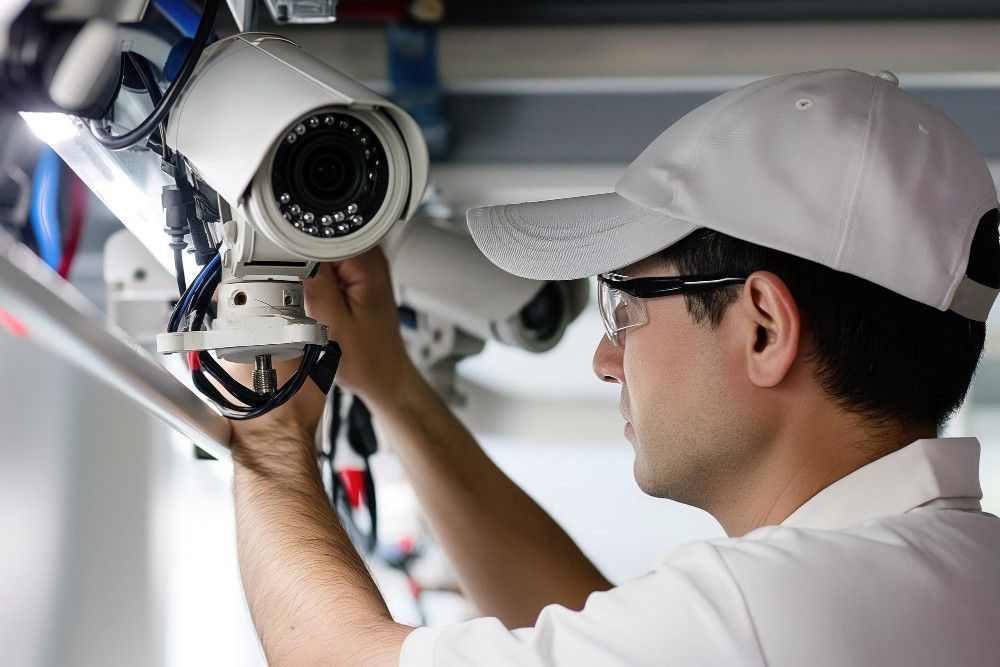
5. Installation: Cameras get mounted, wired, and connected to the recording system.
6. Recorder configuration: The NVR or DVR gets set up with storage settings and recording schedules.
7. Mobile app setup: Remote viewing gets configured so the business owner can check cameras from a phone.
8. Testing: Every camera gets checked for image quality, night vision, and network stability.
9. Training: Staff receive a walkthrough on viewing footage and managing basic system settings.
Which CCTV Camera Type Fits a Property?
Different camera types suit different environments, and choosing the wrong one often leads to weak coverage or unnecessary cost..
| Camera Type | Best Use Case | Key Strength |
|---|---|---|
| Dome | Indoor retail, offices | Discreet, hard to tell viewing angle |
| Bullet | Outdoor entrances, perimeters | Long-range, visible deterrent |
| PTZ (Pan-Tilt-Zoom) | Large open areas, warehouses | Active monitoring with remote control |
| Turret | Indoor and covered outdoor areas | Wide angle, minimal glare |
| Wireless | Temporary setups, rental units | Fast installation, fewer cables |
| IP cameras | Most modern systems | High resolution, network-based storage |
Definition: NVR and DVR
An NVR (Network Video Recorder) processes and stores footage from IP cameras over a network connection. A DVR (Digital Video Recorder) handles footage from analog cameras through direct cable connections. Most new installations now use IP cameras paired with an NVR for better image quality and remote access.
What Affects the Cost of CCTV Installation in Dubai?
Pricing for CCTV system installation depends on several variables rather than a flat per-camera rate.
● Number of cameras needed for full coverage
● Property size and the number of entry points
● Camera quality and resolution requirements
● Storage capacity and recording retention period
● Cabling distance and complexity, especially for large warehouses
● Existing internet connectivity and bandwidth
● Integration with access control or existing security systems
Where Should Cameras Be Placed for Maximum Coverage?
Camera placement matters as much as camera quality. Common high-priority zones include:
● Reception areas, to identify every visitor entering the premises
● Parking lots, where the strongest crime reduction effects appear in research
● Warehouses, covering loading bays and inventory storage
● Entrances and exits, including emergency exits often overlooked in planning
● Cash counters, where most theft incidents tend to occur
● Hallways, providing continuous coverage between rooms
● Loading areas, monitoring deliveries and vehicle access
What Are the Legal Considerations for CCTV in Dubai?
Dubai has regulatory requirements for many commercial CCTV installations, including compliance with SIRA (Security Industry Regulatory Agency) requirements where applicable. Because regulations may vary by property type and project, businesses should confirm current requirements directly with SIRA or Dubai Police before installation.
Requirements can change, so businesses should confirm current rules directly with SIRA or Dubai Police before installation rather than relying solely on general guidance. A licensed installer typically stays current on these requirements as part of standard practice.
How Should a Business Maintain a CCTV System After Installation?
Maintenance keeps a CCTV system reliable long after the installation team leaves.
● Cleaning camera lenses regularly to prevent blurry or obstructed footage
● Firmware updates that patch security vulnerabilities and improve performance
● Storage checks to confirm the NVR or DVR has enough free space for continuous recording
● Network health checks since CCTV systems depend on stable connectivity
● UPS backup to keep recording active during power outages
● Lens inspection for weather damage on outdoor cameras
DIY Versus Professional CCTV Installation: Which Is Right for a Business?
| Factor | DIY Installation | Professional Installation |
|---|---|---|
| Setup time | Hours to days, depending on skill | Faster, planned in advance |
| Coverage planning | Often inconsistent | Based on a proper site survey |
| Cabling quality | Risk of exposed or poorly routed cables | Clean, protected routing |
| Integration | Limited compatibility checking | Coordinated with network and access control |
| Long-term reliability | Higher risk of gaps or failures | Backed by warranty and support |
DIY setups can work for very small residential needs, but commercial properties benefit far more from professional planning, since gaps in coverage often go unnoticed until an incident happens.
A complete security setup usually connects CCTV with door access control and structured cabling services, since clean cabling supports both camera systems and access readers without conflicts. Businesses already running on older infrastructure can also review network cabling services in Dubai before adding new cameras.
Need CCTV Camera Installation in Dubai?
Whether you need CCTV cameras for a retail store, office, warehouse, or residential property, ZeeTech provides tailored installation, system configuration, and ongoing support. Our team helps you choose the right solution for your security needs and budget.
Need a reliable CCTV system? Contact ZeeTech today for a site survey and a customized installation quote.
Frequently Asked Questions About CCTV Camera Technicians in Dubai
How many cameras does a small office or shop typically need in Dubai?
Coverage depends on layout rather than square footage alone. A small shop with one entrance might need four to six cameras, while a multi-room office often needs coverage at every entry point and high-traffic hallway.
Do CCTV cameras keep recording if the internet connection goes down?
Local recording to an NVR or DVR continues even without internet, since storage happens on-site. Remote mobile viewing pauses until the connection returns, but no footage gets lost during the outage.
How long are CCTV recordings usually stored before they get overwritten?
Retention periods depend on storage capacity and the number of cameras recording simultaneously. Higher-resolution footage and more cameras both shorten the retention window unless storage gets sized accordingly during planning.
Can an existing analog CCTV system get upgraded to an IP camera setup?
Yes. A qualified technician can replace analog cameras with IP cameras and reconfigure the recorder, giving a property sharper image quality, better remote access, and support for modern features like motion-based alerts.
What happens to footage if a camera gets damaged or goes offline?
Footage already recorded and stored on the NVR or DVR remains intact. Only the period after the camera goes offline goes unrecorded, which is why system health checks matter for catching outages quickly.
Does ZeeTech supply and install both IP and analog CCTV cameras in Dubai?
Yes. ZeeTech's CCTV installation team works with both IP and analog systems, recommending the right option based on the property's existing infrastructure and coverage needs.


