

 Zeetech
 27/04/2026
Complete Guide to CCTV Installation in Dubai Homes & Offices
Most people in Dubai only think about CCTV after something goes wrong. A break-in. A theft. An incident they wish they had recorded.
Do not wait for that moment.
CCTV installation in Dubai has become much more affordable and accessible than it was even five years ago.
Whether you live in a villa or run a small office, you can now protect your space with a proper camera system without spending a fortune.
This guide covers everything you need to know before you get started.
Why People Choose to Install CCTV at Home and Office
The reasons are simple.
At home, you want to know your family is safe. You want to see who rings the doorbell when you are not there. You want footage if someone tries to break in or damage your property.
At the office, you want to protect your equipment and your team. You want to monitor who enters your building. You want a record of what happened if something goes missing or an incident occurs.
A good CCTV system gives you all of that. And with modern systems, you can watch your cameras live from your phone, anywhere in the world.
Step-by-Step: How CCTV Installation in Dubai Works
A proper installation of CCTV cameras is not just about sticking the cameras on walls. It follows a clear process. Here is what that looks like.
Step 1: Site Survey
A technician visits your property first. They look at your layout, your entry and exit points, your lighting, and any areas that need coverage. This step shapes everything that comes after.
Skipping it almost always leads to cameras in the wrong places.
Step 2: Choosing the Right Cameras
Not every camera works in every space. Here is a quick breakdown:
Dome cameras are great for indoor areas like offices and hallways. Bullet cameras handle outdoor spaces well. PTZ cameras can rotate and zoom, which makes them good for large open areas like parking lots. IP cameras connect to your network and give you sharp, high-quality footage.
Your installer will recommend what fits your space, not what is most expensive.
Step 3: Cabling
This part matters more than most people think. Loose or poorly run cables cause signal problems down the road. A professional team runs cables cleanly through walls and ceilings so everything looks neat and works reliably.
Step 4: Setting Up Your Recorder
Your footage gets saved to a DVR or NVR, which is basically a storage box for your video. The installer sets up how long footage is kept, how much storage you have, and how backups work.
Step 5: Remote Viewing
Once everything is running, you should be able to open an app on your phone and see your cameras. Your installer should set this up for you and show you how to use it before they leave.
Home vs. Office CCTV Installation: What Is Different
Home installations are usually simpler. You focus on the front door, gate, driveway, and maybe one or two indoor areas. There are fewer cameras, but their placement has to be spot on.
Office CCTV installations are more complicated. You may need cameras covering reception, the server room, warehouse floors, and car parks. You might also want to connect your cameras to an access control system so you can track who enters which areas.
Both need proper planning. The number of cameras and the amount of storage change based on the size of your property.
Signs of a Professional CCTV Installation Company in Dubai
There are many companies offering home CCTV installation services and CCTV setups in Dubai. Here is how to tell a good one from a bad one.
They visit your site before recommending anything: If a company sends you a quote without seeing your space, that is a warning sign.
They handle everything themselves: Survey, supply, installation, and support should come from one team. If they hand you off to three different people, problems will fall through the cracks.
They give you clear pricing: The quote should break down cameras, cabling, labor, and storage. No vague line items.
They stay available after the job is done: Your system will need occasional updates and fixes. A company that disappears after installation leaves you on your own.
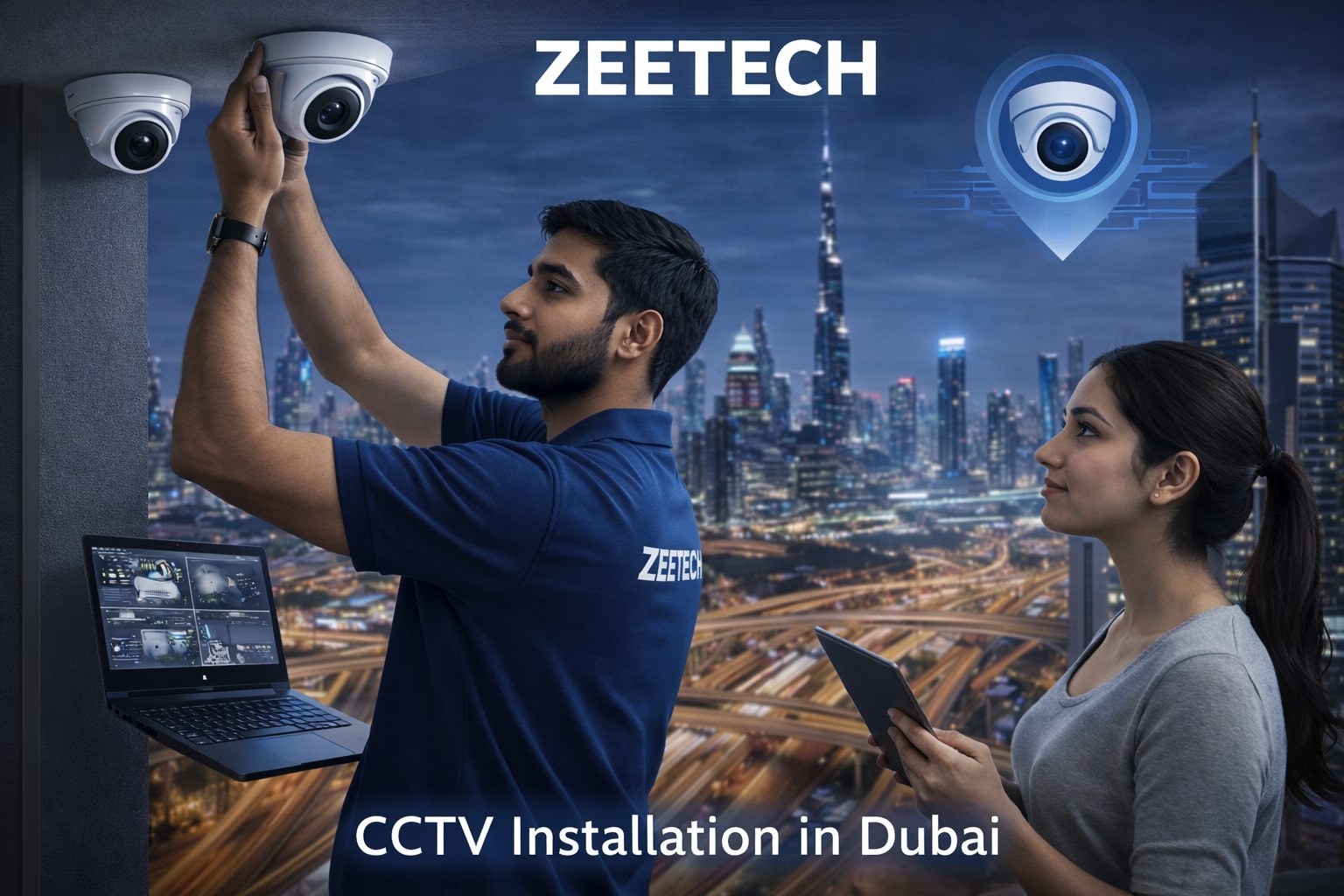
Zeetech handles CCTV installation in Dubai for homes, offices, shops, and warehouses. They survey your site, design the coverage, install everything cleanly, and walk you through using the system before they leave.
They also offer maintenance contracts if you want regular checkups and priority support going forward.
Mistakes That Cost People Later
These come up often, and they are all avoidable.
Cameras placed too high: You end up with footage of the tops of people's heads. Not useful at all.
No lighting consideration: A camera facing bright sunlight or a dark corner gives you useless footage at key moments.
Buying too few cameras: Gaps in coverage mean gaps in security. Spend a little more upfront to cover the areas that matter.
Trying to do it yourself: DIY systems often look messy, perform poorly, and end up being replaced anyway. Professional installation takes a few hours and is done right the first time.
The Bottom Line
CCTV installation in Dubai is one of the smartest investments you can make in your home or business. But this should only be done properly.
Take the time to plan it well. Work with a team that understands your space. Make sure you can actually use the system once it is set up.
Whether you want to install CCTV at home or in the office, the right approach is the same. Start with a proper survey, choose cameras that fit your needs, and work with people you can trust to support you after the job is done.
Frequently Asked Questions
Do I need permission to install CCTV cameras in my Dubai apartment or villa?
If you live in a managed community or apartment building, check with your building management first. Dubai has clear guidelines around CCTV privacy. Your cameras should only cover your property. They should not point into a neighbor's home, a shared stairwell you do not manage, or a public street. For most homeowners, a simple outdoor camera at the entrance is fine without any special approval.
What resolution do I actually need for my CCTV cameras?
For most homes and small offices, a 2MP or 4MP camera gives you clear enough footage to identify faces and read number plates. You only need higher-resolution cameras, like 8MP, for large spaces where cameras are placed far from the area they are watching. Higher resolution also means more storage, so balance quality with how long you want to keep your footage.
Can I add more cameras later if my needs change?
Yes, in most cases. A well-designed system leaves room to expand. When you get your installation done, ask your technician whether your DVR or NVR has spare ports for extra cameras and whether the cabling can be extended. Planning for future growth at the start saves you money compared to replacing the whole system later.


